
Browse the Catalogue
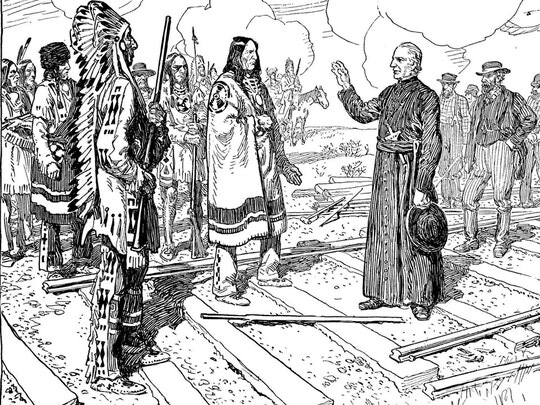
The coming of the railroad in to the prairie country stirred the minds of the Indians of the West with uneasy forebodings. They saw in the surveyors with their instruments, measuring out the lands, magicians of evil omen...
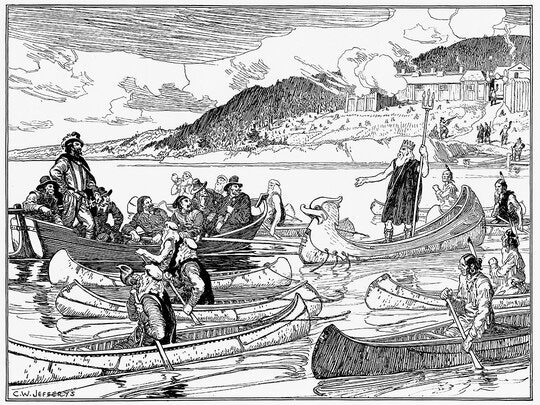
This play, entitled The Theatre of Neptune, was performed on the 14th of November, 1606, to welcome the return of Poutrincourt, the governor, from a voyage of exploration.
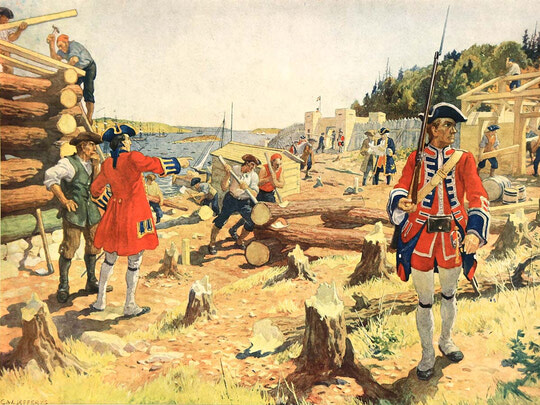
The founding of Halifax was an early experiment in town planning and assisted immigration. In 1749 the British Government decided to establish a settlement in Nova Scotia.
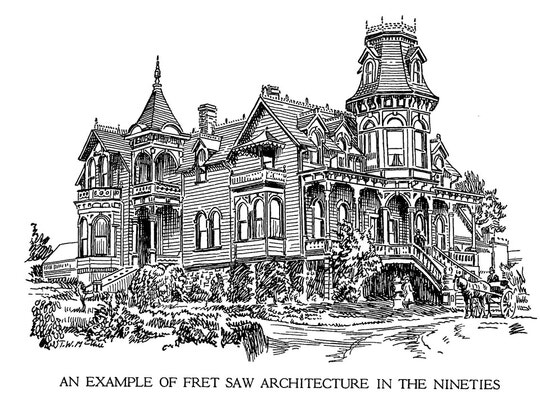
The Royal Canadian Yacht Club of Toronto (originally the Toronto Yacht Club) has had no less than nine "homes" in a period extending from 1852 to 1950.
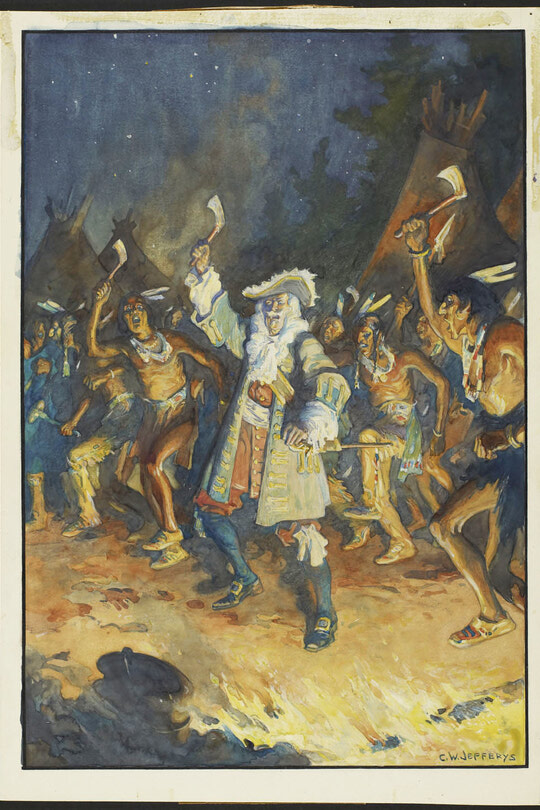
Then, seizing a tomahawk and waving it in the air, the courtly and dignified old governor sang the war song, and, whooping and stamping, led the savages in the war dance around the camp fire.
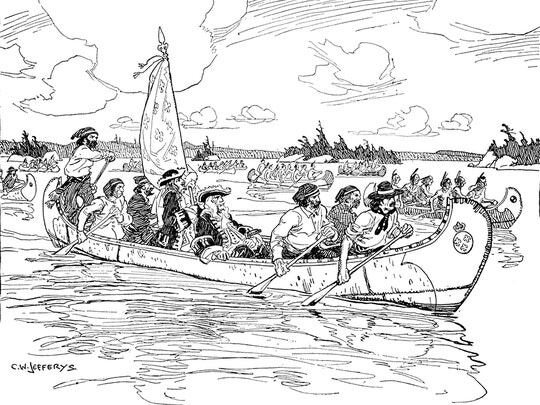
Late in June, 1673, Frontenac set out from Montreal on his journey up the St. Lawrence. With him there were about 400 men; habitants, voyageurs, Indians, old soldiers of the Carignan regiment...
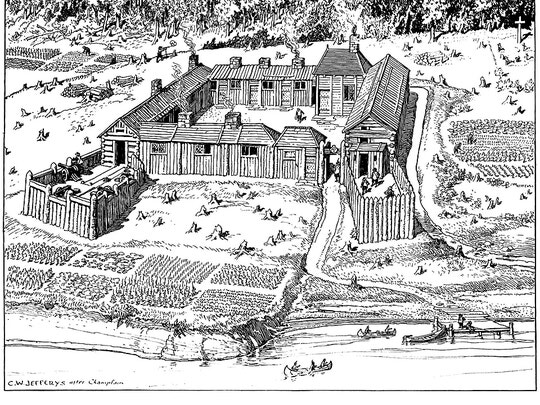
The Habitation of Port Royal was the first permanent white settlement in America, north of the Spaniards. We have some scanty descriptions of it in the writings of Champlain and Lescarbot, and a few references in the Jesuit Relations...
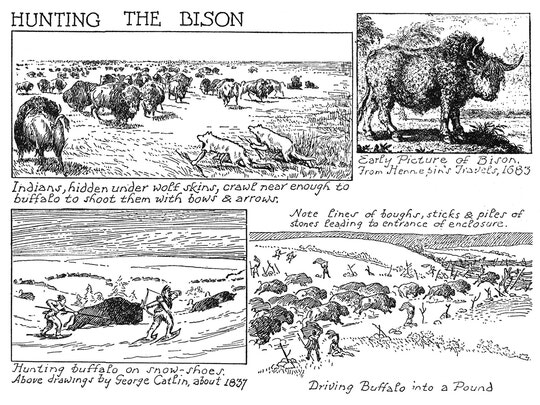
Indians, hidden under wolf skins, crawl near enough to shoot them with bows and arrows.
Early pictures of Bison. From Hennipin's travels, 1683
Hunting buffalo on snow shoes. Above drawings by George Carlin, about 1837.
Driving buffalo into a pound...
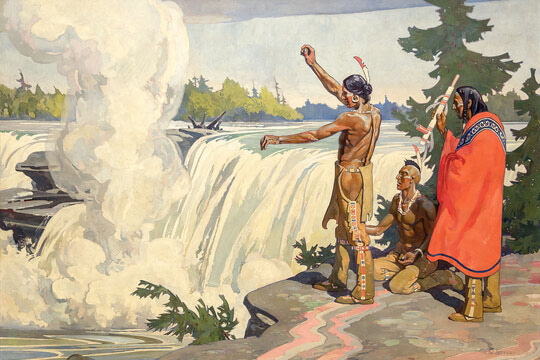
The `Petun' (tobacco) sacrifice at the Chaudière Falls.
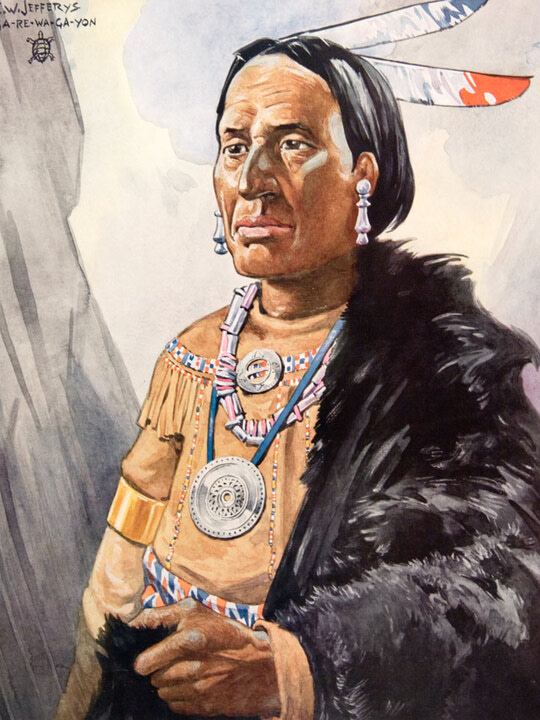
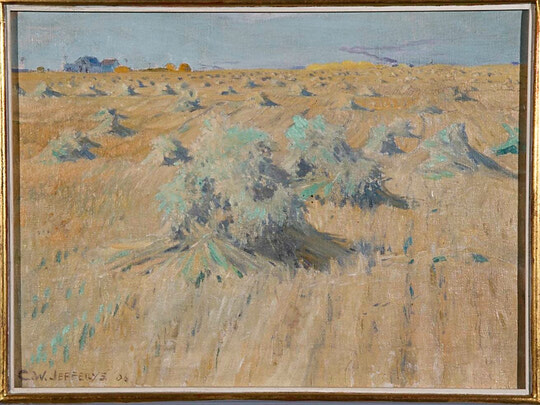
“C.W. Jefferys’ art-greeting to 1944 is a series of six magnificent Indian-chief heads on a calendar. Only a painter with the conviction that true history is not chronology, but the vital record of humanity...
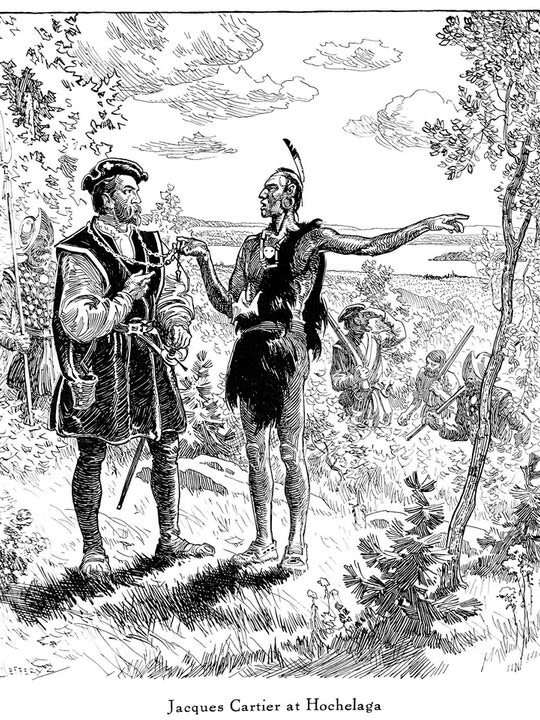
Cartier's own account tells us that the Indian chief, seizing the silver chain of the whistle hanging round his neck, which he used for giving signals on ship-board, and pointing to the handle of a dagger made of copper gilt like gold...
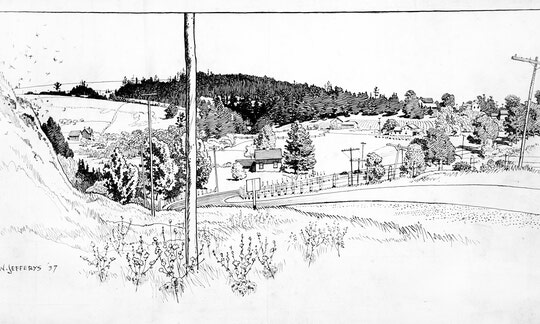
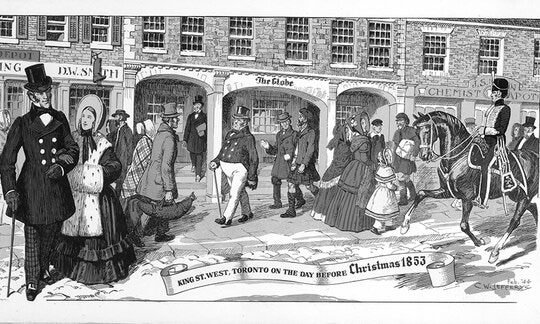
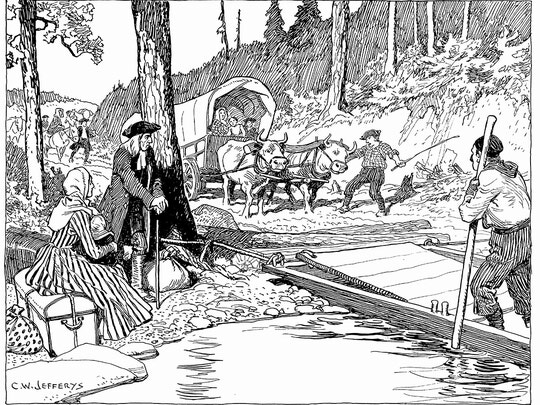
The picture shows a party of these early Loyalist refugees arriving at the bank of a river on their way to Canada. A rough road has been cut through the woods to the crossing place.
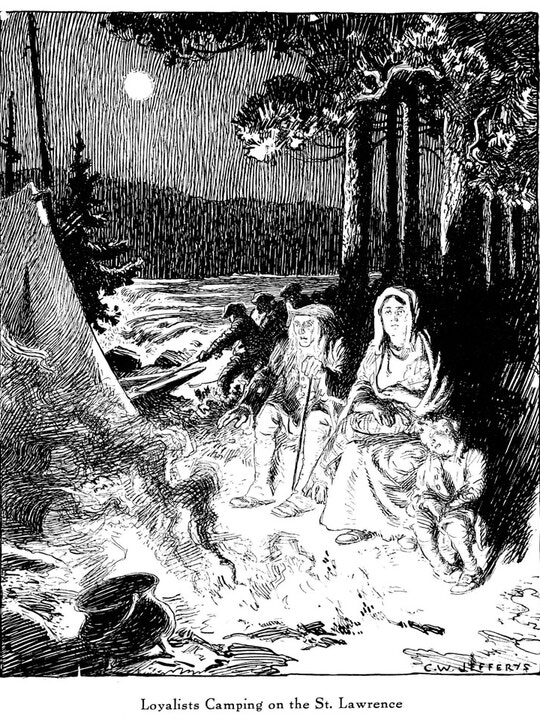
The greatest migration to Upper Canada took place along the shores of the St. Lawrence and the Bay of Quinte. In the early summer of 1784 the refugees started on the long journey to their new homes.
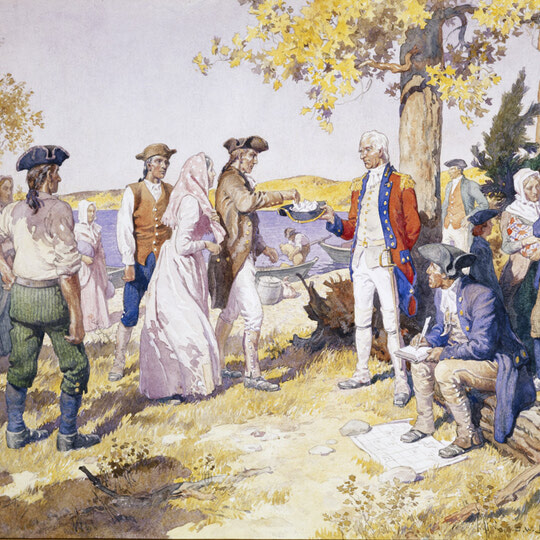
The picture shows the drawing of the lots. One of the leaders of the party holds the hat: beside him is seated the assistant surveyor, who acted as the land agent and registrar...
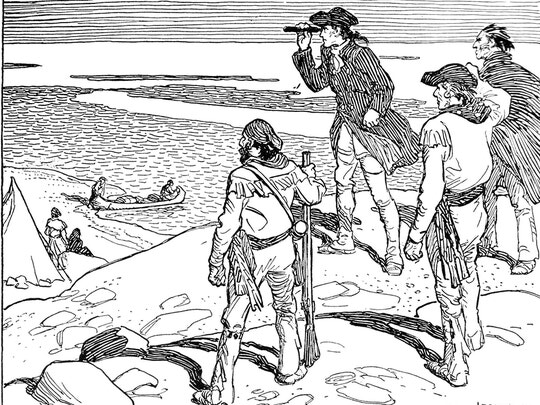
It is an interesting coincidence that on the same day that Mackenzie saw the Arctic Sea from an island at the mouth of the Mackenzie River, July 14, 1789, the people of Paris attacked and captured the Bastille.
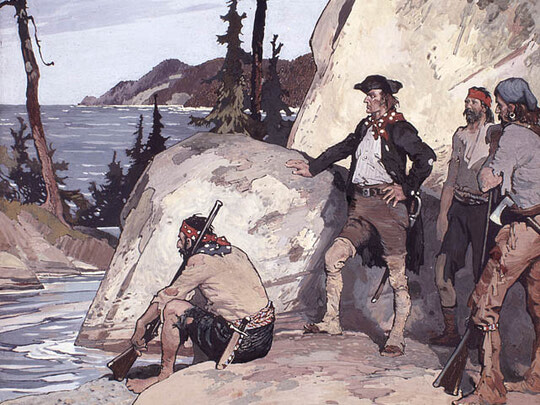
Mackenzie in his Journey speaks of having a hanger, a short sword, convenient for traveling in rough country, similar to that carried by Wolfe, as shown in the drawing in Vol. I, p. 242, depicting him at the Battle of the Plains.

Inspired by their heroic mistress, the defenders held out against assaults continued day and night until toward the evening of the fourth day, Easter Sunday, Charnisay's men succeeded in making a breach in the palisades and entered the fort.