
Browse the Catalogue
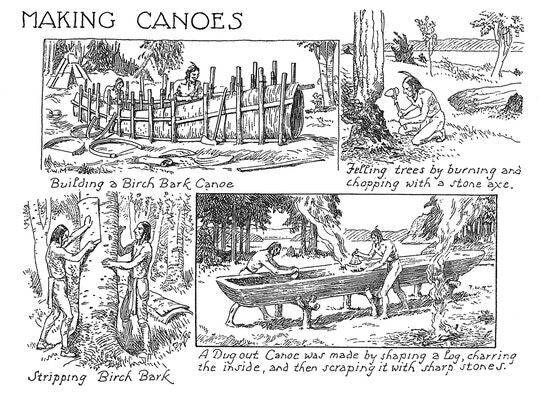
Building a birch bark canoe. Felling trees by burning and chopping with a stone axe. Stripping birch bark. A dug out canoe was made by shaping a log, charring the inside, and then scraping it with sharp stones.
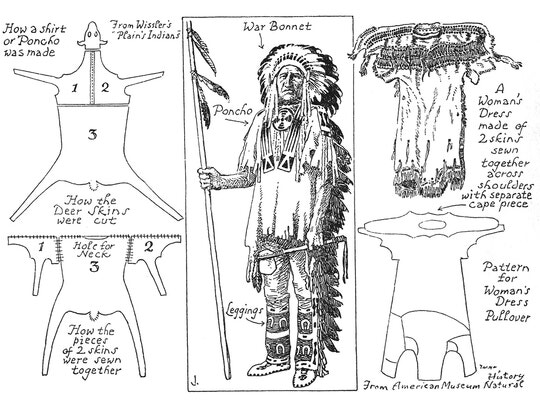
How a shirt or poncho was made
How the deer skins were cut
War bonnet, poncho, leggings
A woman's dress made of 2 skins
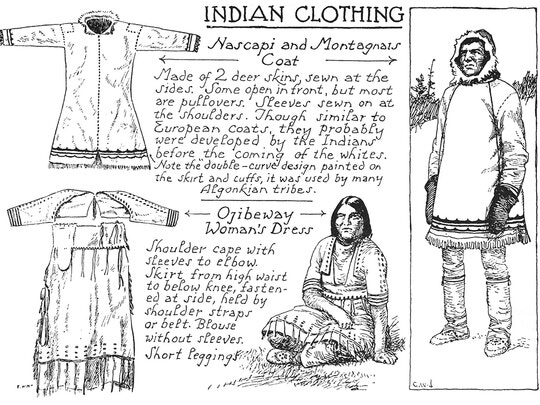
The clothing of the Indians varied according to the nature of the country which they inhabited. In addition to the skins of fur-bearing animals, which they used as robes, they also fashioned garments fitted to the body.
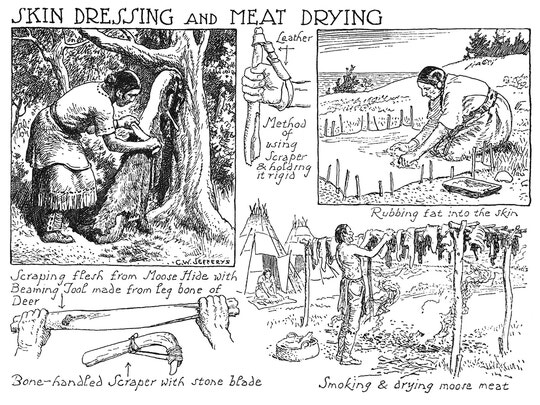
The beaming tool was so named because the skin to be dressed was laid over a smooth log or beam from which the bark had been stripped.
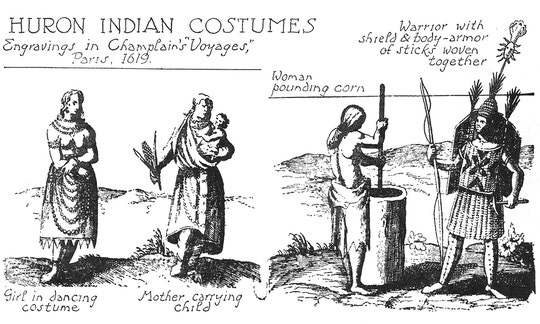
Engravings in Champlain's "Voyages" Paris 1619
Girl in Dancing Costume
Mother carrying child
Woman pounding corn
Warrior with shield and body armor of sticks woven together
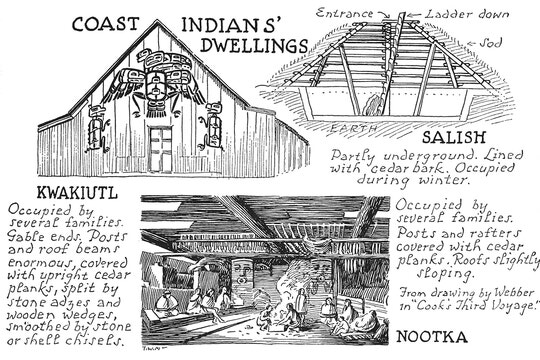
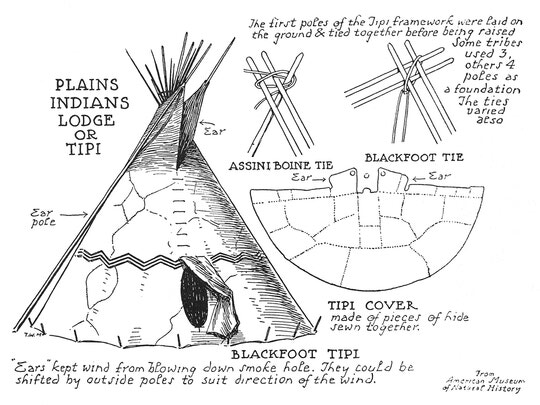
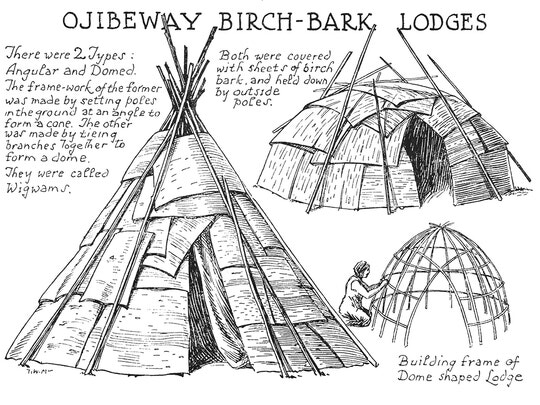
There were two types: Angular and domed. The framework of the former was made by settings poles in the ground at an angle to form a cone. The other was made by tying branches together to form a dome. They were called wigwams.
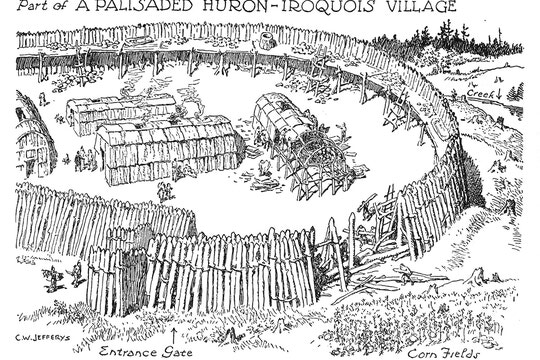
Cartier thus describes Hochelaga:
"The village is circular and is completely enclosed by a wooden palisade in three tiers like a pyramid. The top one is built crosswise, the middle one perpendicular...
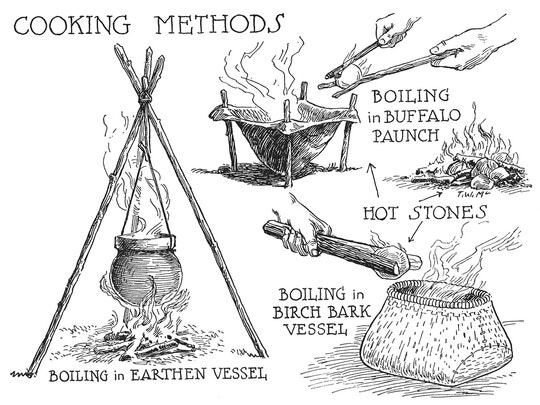
Boiling in buffalo paunch, boiling in birch bark vessel, boiling in earthen vessel.
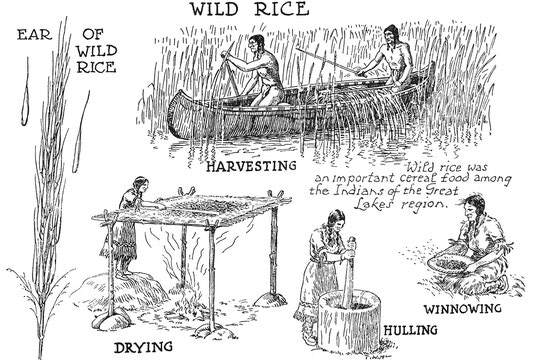
Wild rice was an important cereal food among the Indians of the Great Lakes region.
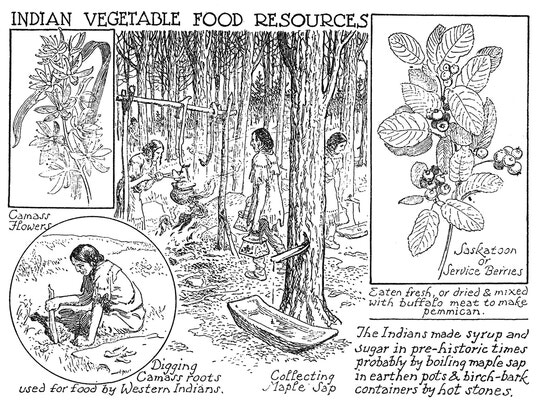
Camass flowers, collecting maple sap, Saskatoon berries, digging camass roots
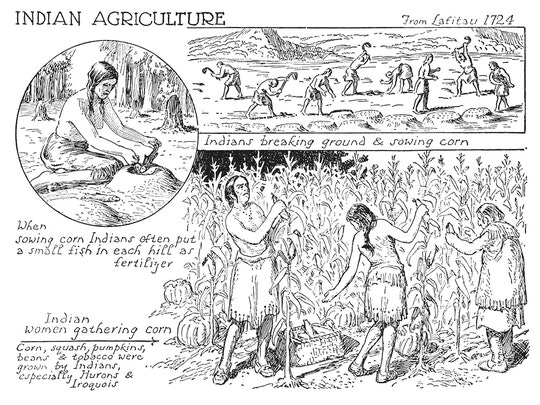
Using fish as fertilizer, breaking ground and sowing corn, women gathering corn
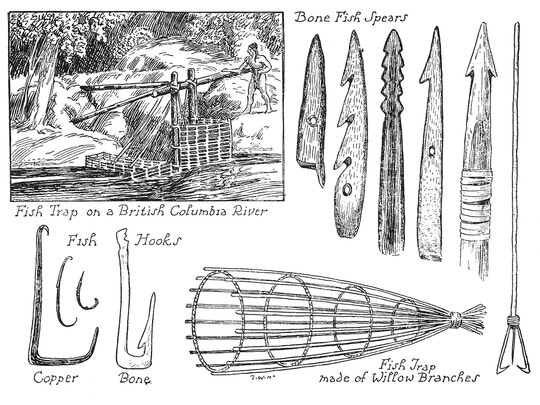
Fish Trap on a British Columbia River.
Bone Fish Spears.
Copper and Bone Fish Hooks.
Fish Trap Made of Willow Branches.
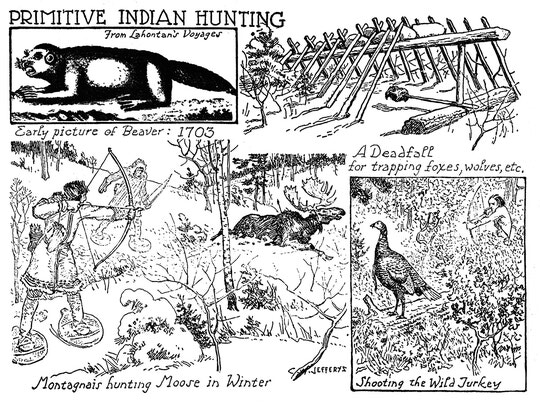
Early picture of Beaver: 1703 (From Lahontan's Voyages)
A Deadfall for trapping foxes, wolves, etc.
Montagnais hunting Moose in Winter
Shooting the Wild Turkey
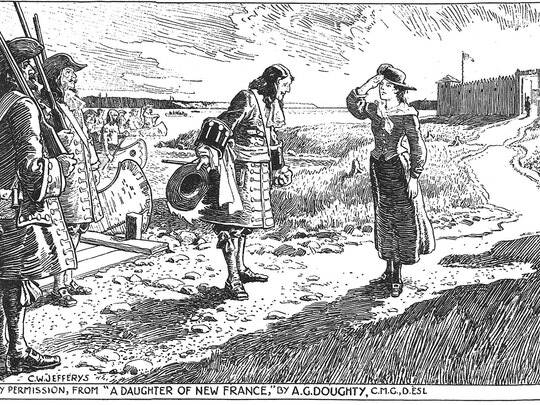
"As soon as I saw Monsieur de la Monnerie. I saluted him and said, 'Sir, I surrender my arms to you.' He answered gallantly, 'Mademoiselle, they are in good hands.'